Red Muntjac
(Muntiacus vaginalis)
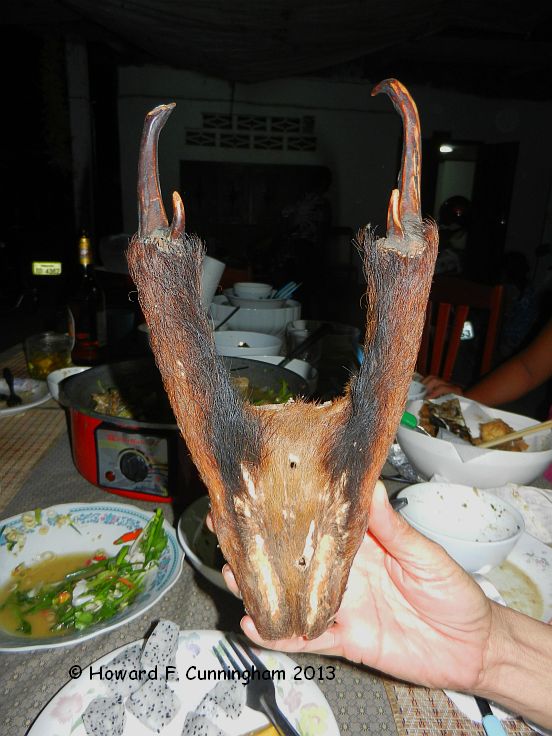
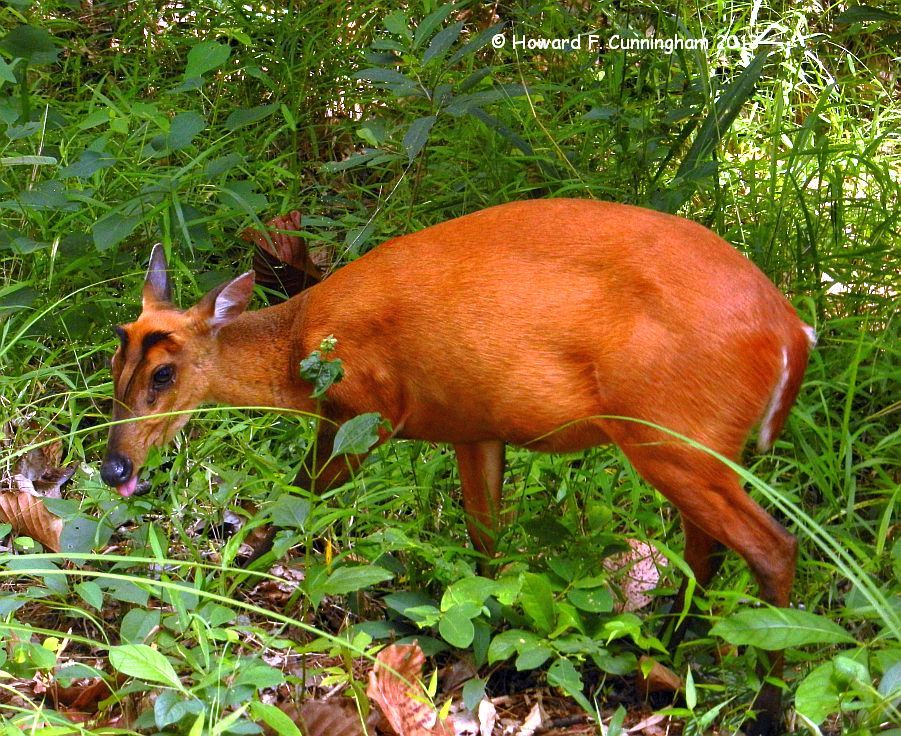
Also called Barking Deer, there are an undefined number of subspecies found throughout Asia and SE Asia, their taxonomy is uncertain. They are the oldest known members of the Deer family; the earliest known species to actually have antlers. IUCN Status: Least Concern, population decreasing.
|
|
|
|
Widely known in Thailand as the barking deer, it
is a small, ancient deer species that thrives
across the Kingdom's tropical rainforests,
deciduous woodlands, and dense forest edges.
Thailand acts as a major zoogeographical hub
for this mammal, splitting into two distinct
lineages at the Isthmus of Kra: the northern
red muntjac (M. vaginalis) to the north and the
southern red muntjac (M. muntjak) to the south.
These uniquely adaptable, solitary animals are
surprisingly omnivorous, foraging the forest
understory for a diverse diet of grasses, fallen
fruits, shoots, seeds, bird eggs, and even
carrion. They are best recognized by their
dog-like, resonant alarm "barks" triggered by
predators like tigers and leopards. Though
they breed year-round and remain relatively
widespread in protected areas like Khao Yai
National Park and Khao Sok National Parks,
they face ongoing pressure from habitat
fragmentation and illegal hunting.
|